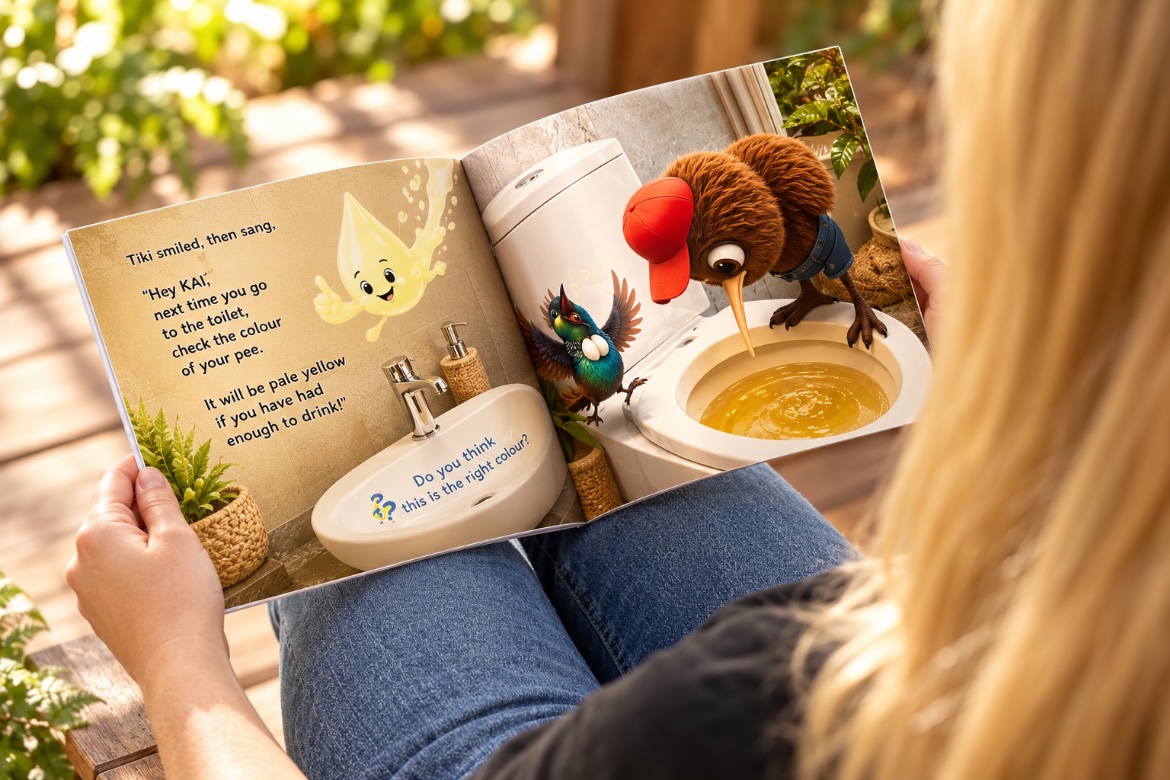
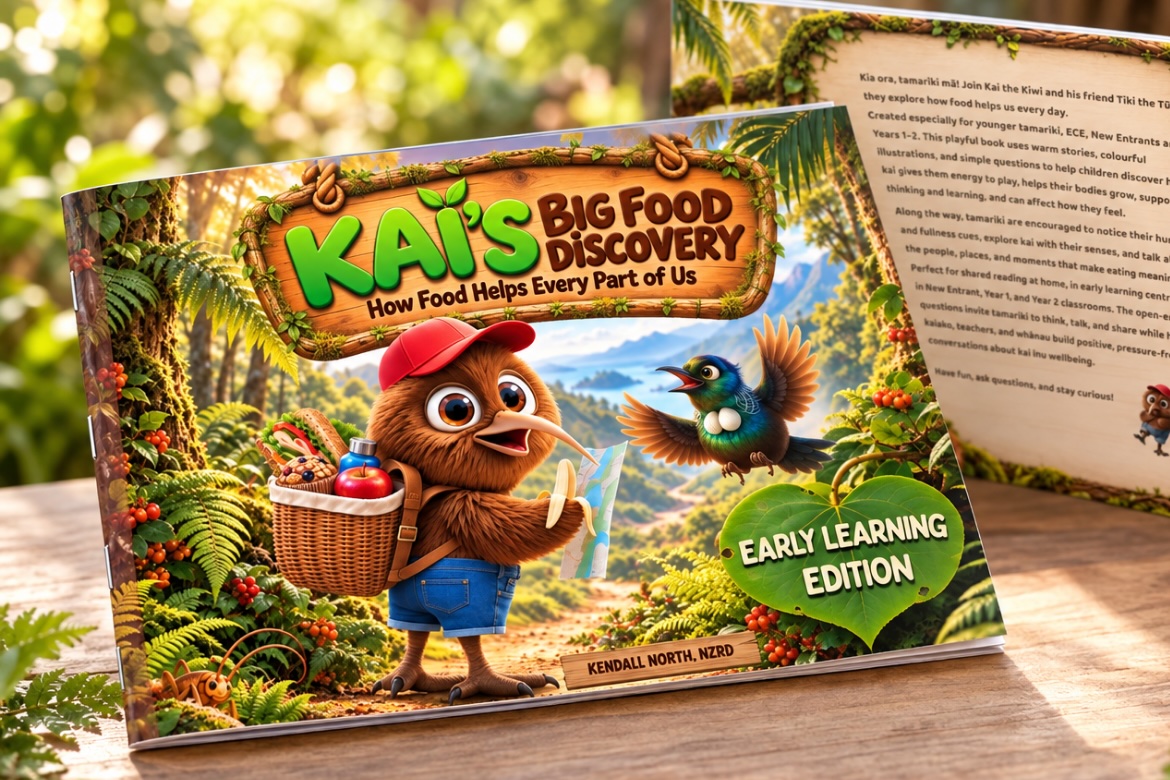
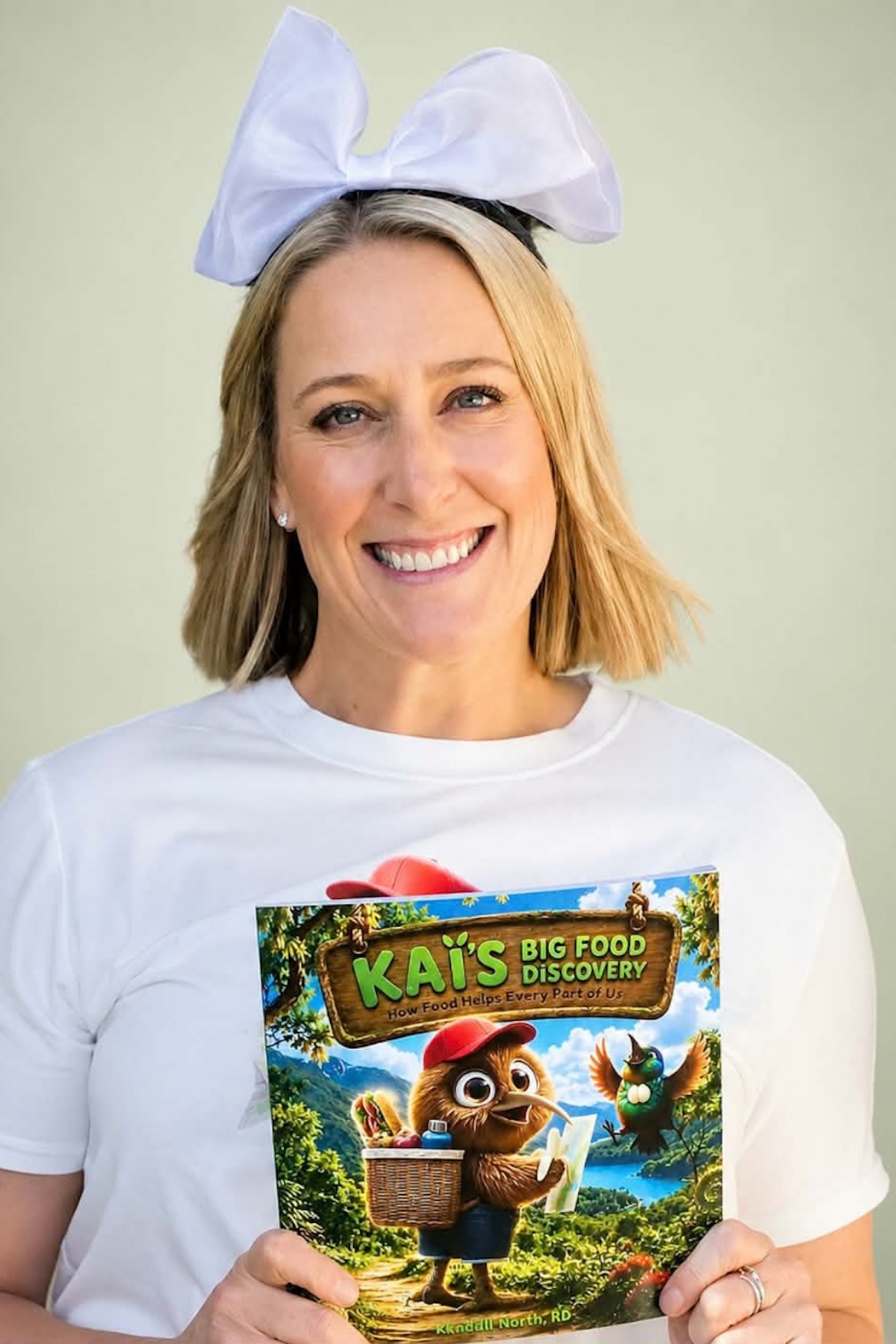
Kendall North is a New Zealand-registered dietitian, former food technology and health teacher and parent who wants to help children understand that food nourishes far more than their bodies. Drawing on her experience in classrooms, clinics and family life, she created Kai’s Big Food Discovery, a playful, interactive story exploring how food helps children grow, learn, feel and connect. Through Kai the Kiwi and his friend Tiki the Tūī, Kendall offers families a warm, practical way to nurture curious, confident food explorers, with connection and discovery at the heart of the conversation. Here, she talks to The Natural Parent Magazine about the inspiration behind what she does, navigating work-family balance, and her hopes and dreams for the future.
The passion: What inspired you to set up your business?
Kai the Kiwi grew from the overlap of three important parts of my life: being a dietitian, a former food technology and health teacher, and a parent. Across classrooms, clinics and everyday family life, I kept noticing how quickly children absorb messages about food. Even well-intended conversations can become focused on rules, nutrients, body size, or foods being labelled as “good” or “bad.” What is often missed is everything else food gives us.
Food supports energy and growth, but it also helps children learn, experience and regulate emotions, connect with whānau, participate in traditions, create memories and feel that they belong. I wanted children to understand that wider picture and develop a sound foundation before fear, guilt or diet culture shaped the way they saw food and themselves.
My daughters have each had their own unique food journeys, and they have been a huge part of this passion project. They keep me on my toes and continue to help me grow as both a mum and a professional. I wanted to create something that would help all children listen to their inner world while giving tired parents and caring adults a calmer, more connected way to talk about food.
The launch: How did you start out in the beginning?
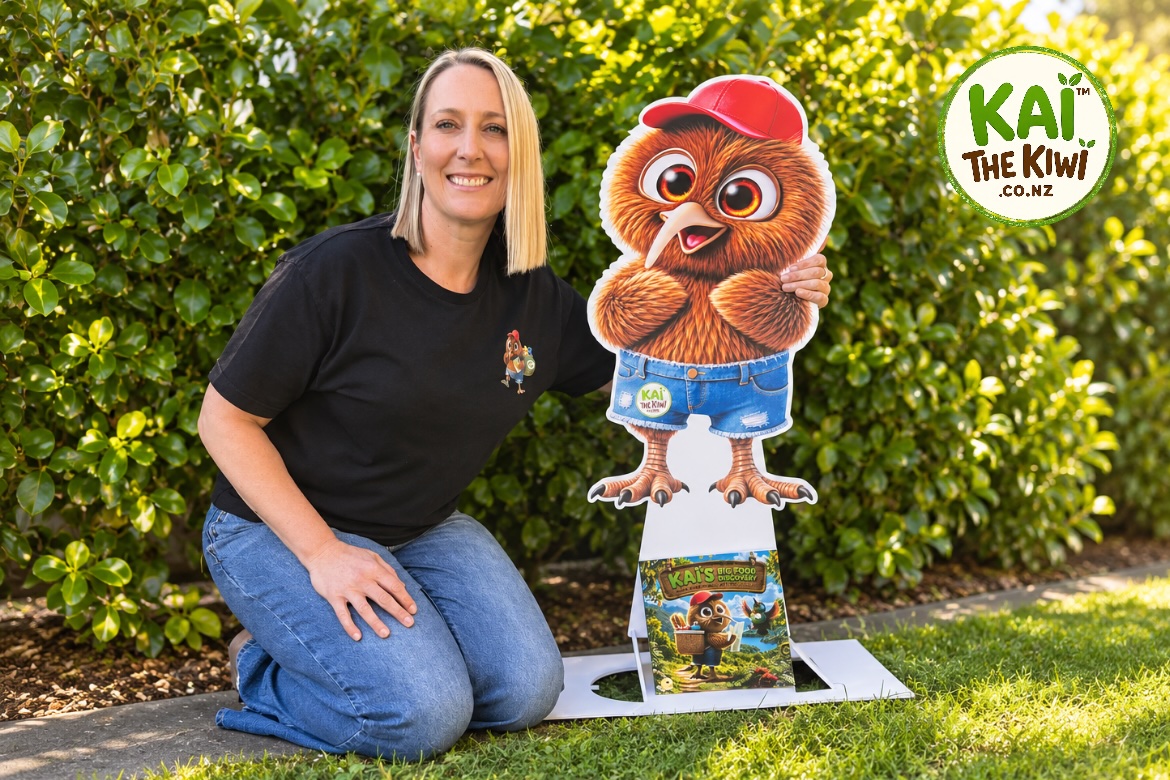
The spark came from my sister, Jenna. She showed me a library book that her three-year-old daughter, Navy, had brought home. It was about elephants and weight loss, and it annoyed me enough that I wrote the first draft of Kai’s Big Food Discovery that very weekend. The fire was lit.
I knew children deserved a different kind of food story-one that did not tell them what they “should” eat or make body size the focus. I wanted a playful adventure that invited them to notice, wonder, ask questions and discover the many ways food influences how we grow, learn, feel and connect.
From there, Kai and his friend Tiki the Tūī began to take shape. I brought together my clinical nutrition knowledge, teaching experience, parenting and personal growth. The process was very hands-on: writing and rewriting, refining the questions, developing the characters, checking the nutrition concepts and making sure the message remained gentle, balanced and accessible.
The innovation: What was the biggest breakthrough for you with your business?
The biggest breakthrough was realising that the most powerful point of difference was not simply teaching children about food-it was changing the frame completely. This book is about more than eating. Instead of sorting food into rigid categories or presenting nutrition as rules, it centres calm support, structure, curiosity, connection and confidence.
The interactive questions are an important part of that. They encourage children to think, reflect and share their own ideas with the adults around them. A child can consider the food that gives them energy to play, the smell that reminds them of home, the meal that connects them with whānau, or the food that helps them feel included. They are learning to listen to their body and inner world, not memorise perfect choices.
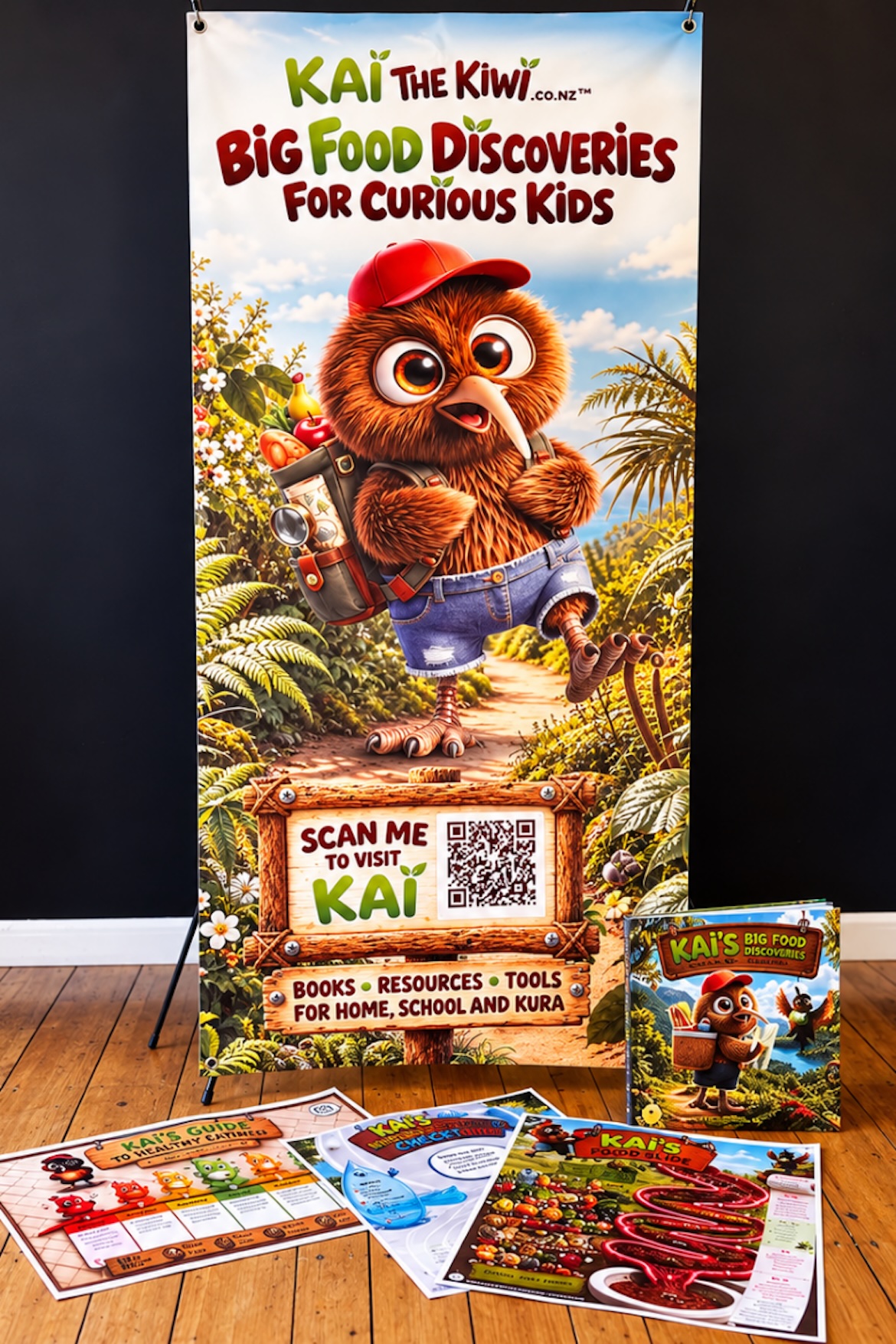
It also made the book useful beyond the home-from early learning centres to kura, and for dietitians and other health professionals. It gives adults a shared language while still feeling like a joyful adventure to a child. That balance-evidence-informed, holistic and genuinely engaging-became the heart of Kai the Kiwi.
Yin and Yang: How do you balance work and family?
Honestly, I am still figuring this out. I would love to say I have a beautifully organised system, but much of the time I feel like a hot mess trying to keep all the plates spinning. Balancing parenting, clinical work and a growing creative business is challenging, and there are definitely times when one area receives more of me than the others.
My daughters keep the work grounded, but they also remind me why balance matters. They need me to be their mum-not always the dietitian, teacher, author or business owner. I do not always get that balance right, and I am learning to notice when work has taken over and when I need to stop, reconnect and be present.
Some weeks are simply messy. For me, balance is less about having everything under control and more about continuing to adjust, asking for support, and remembering that I am allowed to learn as I go too.
The drive: What challenges have you overcome?
One of the greatest challenges has been taking a complex and continually evolving body of research and translating it into language that is accurate, age-appropriate and emotionally safe. This has required significant professional learning, but also a great deal of personal reflection and growth. I have had to examine some of the messages about food, bodies and health that I grew up with too.
It can be difficult to develop a different way of talking about food while much of society remains attached to outdated ideas. Nutrition education is still often based on rules, fear, body size and foods being labelled as “good” or “bad.” I wanted to acknowledge that food influences health without creating shame or suggesting there is one “right” way for every child and family to eat.
Turning that vision into a book meant bringing together research, clinical practice, education, storytelling, design and parenting. I needed to remain open to feedback and keep refining the words and images as my own understanding developed. The book was shaped by a generous community of parents, beta readers, friends, doctors and people with expertise in paediatrics, dietetics, education and culture.
Creating something that challenges familiar ways of thinking has not always been easy. However, I believe children deserve food education that reflects what we now understand about physical health, emotional wellbeing, relationships, culture, identity and belonging.
For better or worse: What are the pros and cons of running your own business?
One of the greatest advantages is flexibility. Running my own business means I can be the mum who goes on school camp, coaches netball, attends school activities and watches sports games. Those moments matter deeply to me, and I am grateful that I can shape my work around them-even when that means catching up at unusual hours.
I also have the freedom to create work that aligns with my values. I can bring together nutrition, education, behaviour change, storytelling and holistic wellbeing in ways that may not fit neatly within a traditional role. Hearing that a child has asked to read Kai again or started a meaningful conversation at home makes the work incredibly rewarding.
The downside is that flexibility does not necessarily mean balance. Sometimes it means trying to be present with my children while carrying an enormous list of unfinished work in my head. Alongside being a dietitian, educator and author, I have had to learn social media, marketing, design, website development, artificial intelligence, content creation, publishing, administration and finance. I am also learning about sales, customer service, photography, video editing, printing, distribution, technology and the legal responsibilities of running a business.
I have found this incredibly challenging and time-consuming. Because I do not yet have the financial capacity to outsource much of this work, I am constantly learning parts of other people’s professions while still trying to do my own work well. There is always another platform, system or skill to understand-and often another technical problem to solve.
Running my own business gives me freedom, purpose and precious time with my daughters, but it also requires persistence, resourcefulness and an acceptance that I cannot master everything or do it all perfectly.
Hopes and dreams: What next?
My hope is for Kai’s Big Food Discovery to become a trusted resource in homes, early learning centres, kura and health settings-something children enjoy as a story and adults value as a way to open thoughtful conversations about food and wellbeing.
The next step is to continue building the world around Kai through practical companion resources for families, schools and professionals. I am developing activities that help children explore their senses, notice how food makes their bodies feel, understand balanced nourishment and reflect on the social, emotional and cultural roles of kai.
I would also love to grow Kai into further stories that help children make sense of real-life food experiences, including allergies, intolerances, emotional eating, culture and changing health needs, without creating fear or exclusion. Ultimately, I want Kai’s stories to help children listen to their inner world, feel informed and included, and grow into curious, confident food explorers who understand that nourishment is about far more than what is on a plate.
Visit kaithekiwi.co.nz to find out more, and follow Kai the Kiwi on Instagram and Facebook.