By Camilla van Rosendal
One of the first acts of motherhood is separation.
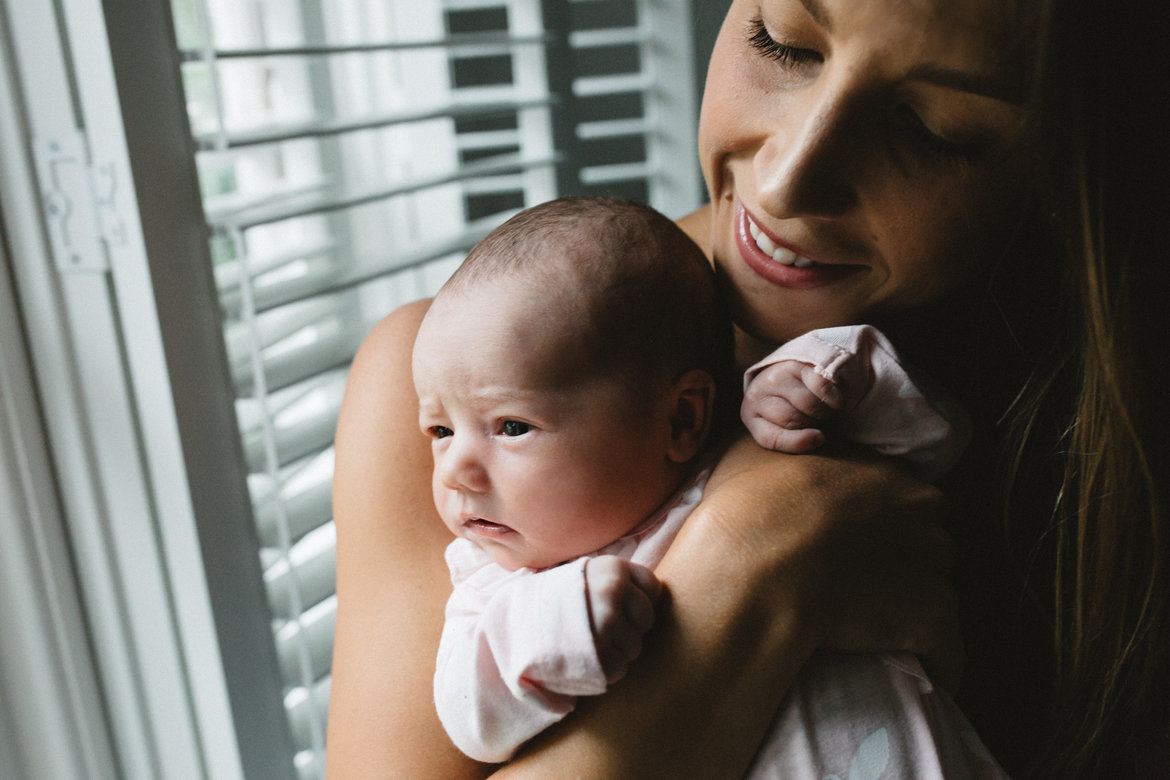
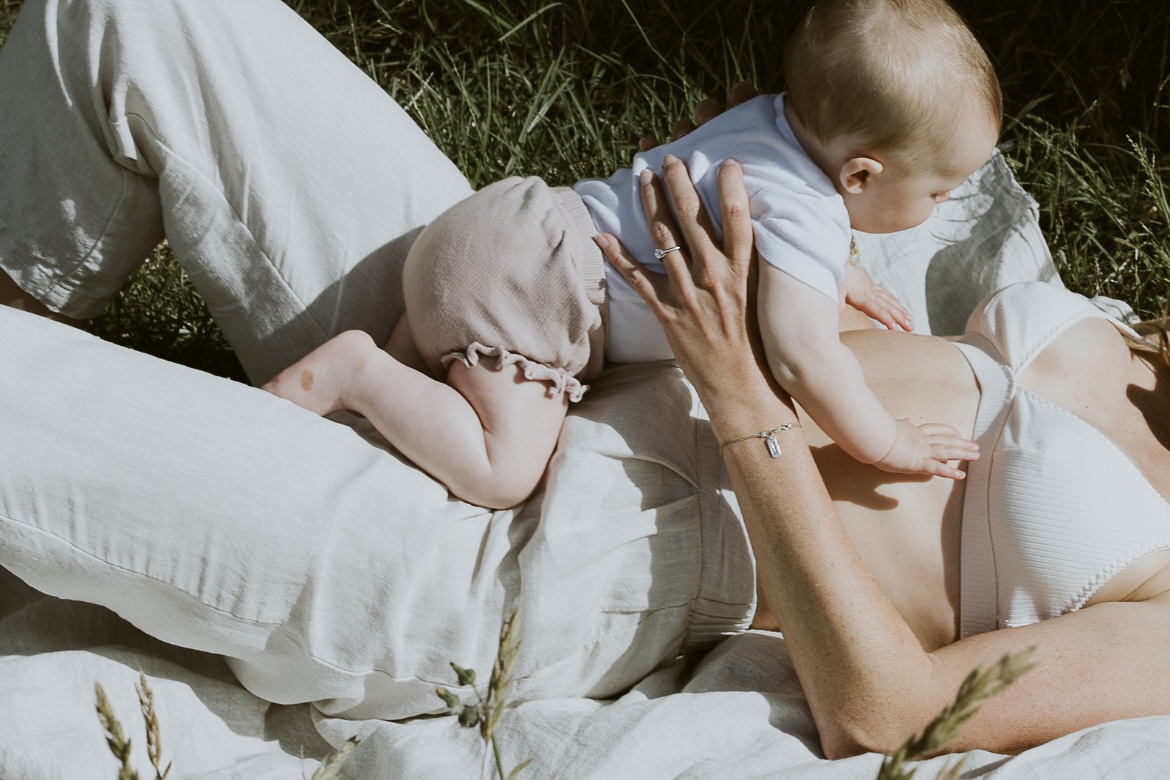
For months, one body makes room for another. A whole human life unfolds beneath the skin, tethered by a cord that carries what it cannot yet provide for itself. There is no distance between need and response; nourishment arrives before hunger has even learned its name. Then birth asks both bodies to do something entirely new: what has existed within must move beyond. The cord is cut, and almost immediately the work of keeping close begins alongside the work of letting go.
I have been thinking about how strange it is that we rarely speak about motherhood this way. We speak often of attachment, of the fierce instinct to protect, of the almost unbearable vulnerability of loving someone whose existence suddenly matters as much as your own. But embedded within motherhood from its very beginning is another instruction, quieter and more difficult to accept: this person came through you, but they do not belong to you.
Maybe that is why so much of mothering can feel like a negotiation with control.
We live in an extraordinary age for raising children. More knowledge about child development, attachment, psychology and wellbeing is available to us than previous generations could have imagined, and much of it has allowed us to question practices that deserved questioning and understand children with greater tenderness and nuance. Yet it is a strange feature of modern motherhood that the more light we throw upon it, the more shadows we seem able to find. Somewhere along the way, access to more information began carrying the promise of something information could never give us: certainty. And when the stakes are this enormous, certainty can begin to look remarkably like safety.
When we love someone this much, uncertainty becomes difficult to tolerate. We want to believe the choices we make might protect them not only from immediate harm, but from wounds we cannot foresee and futures we cannot control. Somewhere beneath the search for the right response or the better way is a much more vulnerable hope: if I do this well enough, surely, they will be okay.
Sometimes modern parenting seems to ask us to stand at the beginning of a human life and work backwards from an adult who does not yet exist.
Expertise matters. Evidence matters. But neither can give us advance knowledge of the person our child will become.
There is money to be made in a mother who believes the answer exists somewhere beyond herself.
A mother who believes there is an answer she has not yet discovered can keep searching indefinitely, and there will always be another philosophy, product or authority prepared to offer one. The uncomfortable question is not whether mothers should seek guidance; of course we should. It is what happens when we become so busy consulting the accumulated wisdom around the child that we begin to mistrust the knowledge gathered by simply living beside them.
Because children have an inconvenient habit of remaining human beings.
They refuse the controlled conditions upon which certainty depends. We can respond with all the wisdom available to us and still discover, sometimes years later, that there were things we simply could not see from where we were standing.
Self-trust, then, may have very little to do with always knowing what to do. It is the willingness to make a thoughtful decision without knowing how the story ends.
The longer I mother, the more I wonder whether this is one of its deepest lessons. We are given enormous responsibility for another human life without ever being granted sovereignty over it. We can influence the conditions in which a child grows, but we cannot determine who they will become, and the distinction becomes more visible with every year that passes.
There are few roles in life in which success requires us to become progressively less necessary.
Motherhood begins with total physical dependence and moves, if all goes as it should, toward increasing separation. The baby whose existence once depended upon the workings of our body gradually becomes the child who moves beyond its reach, and then the person whose interior world can never be entirely ours to know.
Nature seems remarkably untroubled by this instruction. Fruit ripens towards its own release. Fledglings eventually leave the structures built to keep them safe. The tide reaches the shore knowing it cannot remain there. Motherhood may have contained the same wisdom from the beginning: love deeply, hold carefully, release continually.
There is grief in that, even when the separation is exactly what we hoped for. To guide a child towards their own life is to participate in the gradual relinquishing of our place at the centre of it. Control can be love attempting to travel into the future, arriving ahead of the child to remove whatever might hurt them. But no mother can live in tomorrow on her child’s behalf.
Yet our children were never meant to become evidence of how well we mothered them.
Somewhere in the modern pursuit of better parenting, it becomes easy to forget that the life unfolding before us is not a final examination of our own. Their ease cannot prove we did everything right any more than every struggle can be traced back to some place our hands slipped.
Of course, our influence matters. Childhood leaves its fingerprints; so do we. There will be things we wish we had understood sooner, moments we return to with the clarity that only arrives afterwards, places where love will ask us to repair what love alone could not prevent. To take responsibility for these things is part of the work. But responsibility is not authorship.
We may write ourselves deeply into our children’s beginnings without being the authors of who they become.
There is no version of motherhood in which love eventually earns us certainty. The vulnerability remains. It is what love costs when the person we love is free.
The cord is cut at the beginning, but perhaps we spend the rest of motherhood learning what that first separation meant: that love was never asking us to hold on tightly enough to prevent a life from unfolding.
It was asking us to learn the difference between keeping someone close and keeping them ours.
There is something almost impossible about this arrangement. Motherhood can feel like spending years learning the exact pressure with which to hold something that is continually changing shape. Just when our hands learn its contours, it changes again.
The earnest work of motherhood may live somewhere in that narrow space between devotion and surrender: caring enough to keep learning, softening, repairing and beginning again, while knowing that no amount of goodness on our part can write the ending for someone else.
We do not loosen our hands because the work matters less. We loosen them because the life within them was never ours to keep still.
Motherhood is where many of us first learn the impossible work of loving with our whole lives, and loosening our hands anyway.
Camilla van Rosendal is a writer, mother and author of Scatter to Bloom: Conversations with My Intuition. Through the Peaceful Mama Project, she explores matrescence, intuition and the unseen emotional architecture of family life, writing into the questions of identity, belonging and the ways motherhood continually asks women to meet themselves anew.